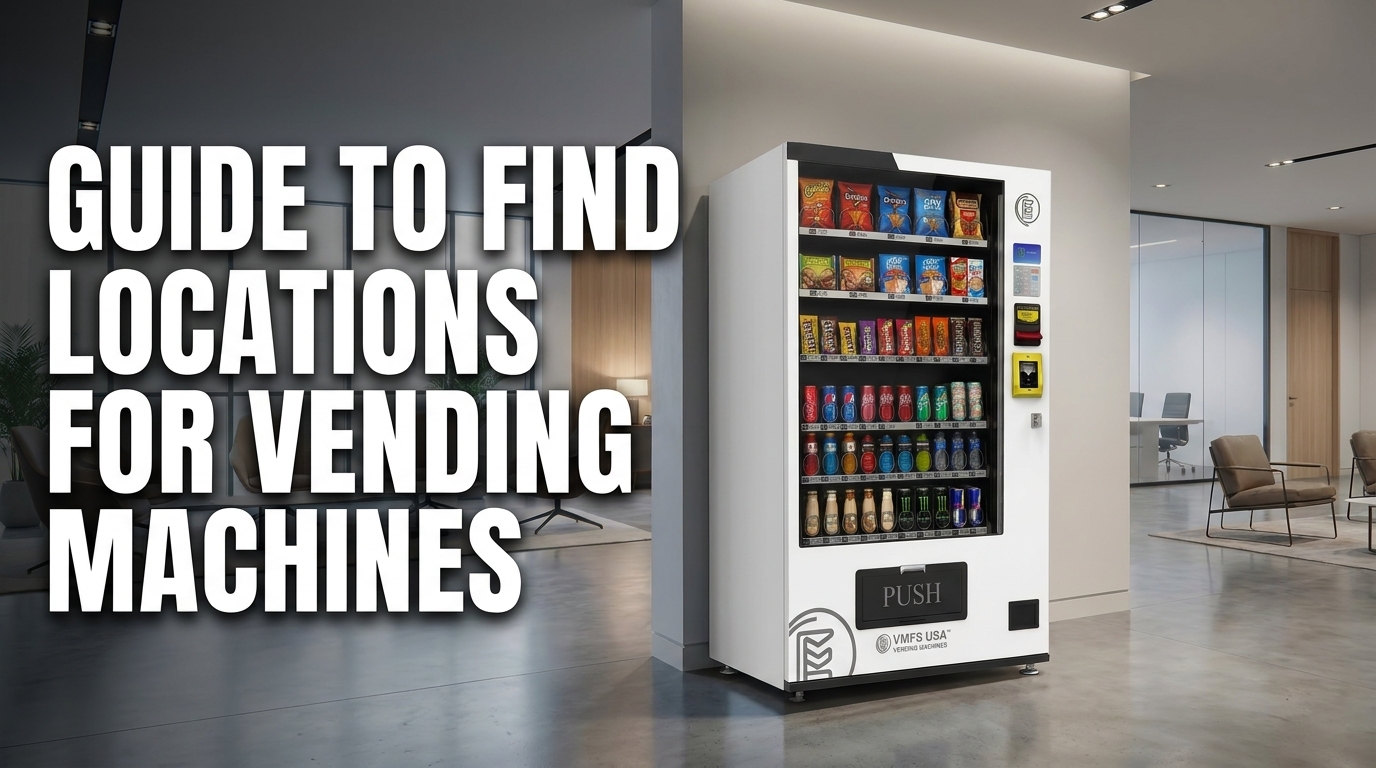
How to Find Vending Machine Placement Locations: The Complete Operator Guide
Finding profitable vending machine placement locations requires evaluating foot traffic volume, site dwell time, demographic purchasing power, and venue operating hours. Securing top-tier sites converts automated retail equipment into consistent passive cash flow, whereas poor location selection leads to underperforming inventory and negative ROI.
Fundamentals of High-Profit Vending Machine Locations
Core Demographic Metrics and Foot Traffic Thresholds
A viable vending machine location requires a minimum threshold of 50 to 100 daily foot traffic visitors who remain on-site for at least 15 minutes. High foot traffic alone does not guarantee sales; captured traffic—individuals with restricted mobility or limited external food options—drives machine usage.
Understanding how to choose a profitable vending location requires analyzing foot traffic patterns, worker shift lengths, and nearby competition. Blue-collar manufacturing plants, call centers, and multi-shift industrial hubs generate higher daily transaction volumes per capita than traditional corporate offices due to scheduled breaks and physical labor demands.
Site Dwell Time vs. Transit Volume Economics
Dwell time directly dictates conversion rates because stationary consumers make impulse purchases at higher frequencies than fast-moving pedestrians. Transit hubs process thousands of daily commuters, yet conversion rates stay below 1% if travelers are rushing to platforms.
Conversely, hospital waiting rooms and auto repair break areas feature smaller total crowds but exhibit conversion rates exceeding 12% due to extended dwell times. When sourcing hardware from commercial suppliers like VMFS USA, matching equipment type to dwell time profiles remains critical for maximizing daily gross revenue.
Top 10 High-Performing Vending Placement Categories
Commercial Office Buildings & Corporate Call Centers
Corporate office environments offer predictable foot traffic and consistent weekday sales volume. Facilities housing over 75 full-time employees yield strong daily transactions, specifically when placed inside central breakrooms.
Manufacturing Facilities & Industrial Warehouses
Industrial sites represent the highest-grossing traditional vending locations due to continuous shift work and restricted off-site movement. Warehouse workers require quick energy sources, driving elevated sales for high-calorie snacks and energy drinks.
Healthcare Complexes, Gyms, and Educational Campuses
Emergency rooms, urgent care clinics, and specialized gyms generate high sales volume outside standard business hours. Educational institutions yield continuous micro-transactions during academic terms.
| Location Category | Min. Daily Foot Traffic | Average Monthly Gross Revenue | Recommended Machine Type | Primary Buyer Driver |
|---|---|---|---|---|
| Manufacturing Plants | 60+ Workers / Shift | $800 – $1,800 | Snack & Drink Combo | Shift Breaks / Extended Hours |
| Corporate Call Centers | 100+ Staff | $600 – $1,400 | Cold Beverage / Coffee | Convenience / Workplace Perks |
| Hospital Breakrooms | 80+ Staff & Visitors | $900 – $2,200 | Glass-Front Snack / Fresh Food | 24/7 Availability |
| Auto Repair Shops | 40+ Customers Daily | $400 – $800 | Compact Beverage | Extended Customer Dwell Time |
| Apartment Complexes | 100+ Residential Units | $350 – $750 | Snack Vending Machines | After-Hours Convenience |
| Fitness Centers | 150+ Daily Members | $500 – $1,200 | Health Snack / Beverage | Post-Workout Protein & Hydration |
Discovering smart places to put a vending machine involves analyzing non-traditional spaces where traditional food access is absent. Placing high-capacity combo vending machines in centralized break areas reduces operational overhead by servicing snack and drink demand through a single footprint.
Reviewing curated lists of the best vending locations provides benchmarks for assessing venue viability across municipal and private sectors.
5 Strategic Methods to Find and Secure Vending Locations
Finding placement locations requires structured outreach across digital, physical, and direct network channels.
Cold Canvassing and Direct Property Management Outreach
Direct door-to-door canvassing yields the highest conversion rate for securing small-to-midsize commercial placements. Visiting industrial parks and speaking directly with business owners, facility managers, or HR directors eliminates middleman delays.
Effective pitches emphasize zero cost to the property owner, full-service maintenance guarantees, and upgraded modern payment systems. Operators utilizing compact units can review tactics on mini vending machines best locations and how to get started to target boutique retail environments.
Digital Prospecting via Google Maps and Local Business Directories
Digital prospecting uses geographic mapping tools to identify high-density commercial clusters within a 15-mile operational radius. Searching local business parks, medical plazas, and logistics hubs produces targeted lead lists for phone and email cold outreach.
Operators filter prospects by employee headcounts on platforms like LinkedIn to prioritize sites with over 50 on-site personnel before initiating contact.
Utilizing Operator Matching Platforms and Location Marketplaces
Online placement marketplaces connect operators directly with facility owners actively requesting vending services. These platforms remove cold outreach friction by matching pre-vetted locations with local route operators.
Location Owner Property Listing: Property managers seeking to add automated food or retail services can list space details and requirements to connect with qualified local operators.List your space on VPlaced to match with operatorsand secure hassle-free machine installation.
Leveraging Real Estate Brokers and Commercial Facility Managers
Commercial real estate property managers oversee multiple buildings and can grant access to entire office parks through a single contract agreement. Establishing relationships with regional facility managers creates portfolio-wide placement opportunities.
When acquiring new or refurbished equipment, operators consult specialized suppliers on where to buy vending machines to secure multi-unit discounts that align with prospective real estate rollouts.
Acquiring Existing Vending Machine Routes and Placements
Buying established vending routes provides immediate cash flow and eliminates cold prospecting timelines. Route acquisitions require inspecting historical telemetry sales data, verifying location lease security, and auditing machine physical conditions.
Route Purchasing Pros
- Immediate baseline revenue from day one of ownership.
- Existing placement contracts and established customer habits.
- Instant operational scale across defined geographic clusters.
Route Purchasing Cons
- Premium valuation multiples applied to historical earnings.
- Risk of outdated, non-cashless machinery requiring hardware upgrades.
- Potential location loss if property managers dislike the ownership transition.
Negotiating Location Contracts and Commission Structures
Standard Commission Rates and Flat Rent Calculations
Vending location commission rates range between 5% and 15% of gross monthly sales, depending on foot traffic density and machine transaction revenue. High-traffic environments like major hospitals command up to 15-20%, whereas small offices under 50 staff frequently accept 0% commission when framed as an employee perk.
Evaluating the vending machine revenue split operator vs location vs supplier prevents operators from agreeing to unsustainable commission tiers that destroy net profit margins.
Key Contract Clauses: Exclusivity, Liability, and Termination
Vending placement agreements must contain specific clauses protecting operator capital, operational access, and exclusivity terms.
- Exclusivity Clause: Prevents the location owner from placing competing vending machines or micro-markets on the premises during the contract term.
- Liability & Maintenance: Establishes that the operator owns the machine and maintains responsibility for servicing, while the location owner provides electrical connections and basic security.
- Termination & Removal Notice: Requires a 30-to-60-day written notice for agreement termination, protecting the operator against immediate eviction.
Understanding how to find vending machine location contracts helps operators construct enforceable legal agreements. Utilizing a vetted vending machine contract template mitigates legal risk and defines property access boundaries clearly.
Legal & Business Structure Advisory: Safeguard your vending operations by establishing a proper legal framework. Form a dedicated corporate entity to separate personal assets from commercial liability.Form an LLC for a vending machine businessand secure a professionalregistered agent for a vending machine businessto ensure state regulatory compliance.
Machine Selection, Product Mapping, and Site Setup
Matching Hardware Types to Location Demographics
Placing the correct hardware category ensures inventory turnover matches demographic preferences. Corporate offices and healthcare centers benefit from modern touch-screen units and automated payment systems.
Modern commercial lobby vending placement with cashless payment integration.. Source: Shar’s Pro Vending Services
Deploying specialized AI grab-and-go vending machines increases throughput in high-density environments by enabling multi-item recognition and frictionless card payment processing.
Product Margin Optimization and Inventory Turnover
Maximizing revenue per slot requires analyzing product profit margins and inventory velocity. High-margin snack items (chips, pastries) yield 60-70% gross margins, whereas brand-name cold beverages yield 45-55% gross margins with higher transaction volume.
Reviewing data on cracking the code unveiling the most profitable vending machine products guides selection toward high-velocity inventory SKUs. Matching products to site demographics is streamlined through comprehensive guides on how to choose the right products for your vending machine.
Maintaining a balance between product shelf life and pricing drives healthy returns. Analyzing your baseline vending machine profit margin identifies underperforming product slots that require removal or price adjustments.
Risk Mitigation, Security, and Legal Protection
Facility Security Protocols and Machine Anchoring
Vending machines positioned in publicly accessible areas face risks of vandalism and cash box tampering. Securing machines requires heavy-duty floor anchoring bolts, lockable steel cages, high-security T-handles, and visible security cameras.
Implementing practices from guarding your investment essential tips for vending machine security prevents property theft and equipment damage in high-risk locations.
Insurance Requirements and Liability Coverage
Commercial property managers require vending operators to carry General Liability Insurance before installing equipment on site. Coverage limits typically demand $1,000,000 to $2,000,000 in general aggregate liability naming the property owner as an additional insured party.
Reviewing a comprehensive vending machine insurance guide ensures compliance with commercial landlord risk mandates. Evaluating broader financial queries like are vending machines a good investment and studying how to build real passive income with vending machines equips operators to construct scalable, low-risk routes over time.
Frequently Asked Questions
How do I find vending machine placement locations near me?
Find local vending placement locations by canvassing local industrial parks, cold-calling facility managers of companies with 50+ employees, searching commercial real estate listings, or using location-matching marketplaces like VPlaced.
What is the average foot traffic required for a profitable vending machine location?
A profitable location requires a minimum of 50 to 100 captive daily foot traffic visitors who remain on-site for 15 minutes or longer.
How much commission should I pay a property owner for vending machine placement?
Standard vending machine commissions range from 5% to 15% of gross monthly sales, with low-traffic sites receiving 0% and high-volume locations receiving up to 20%.
VendBuddy
Do I need a contract to place a vending machine at a business location?
Yes, a written vending location placement contract is mandatory to define machine ownership, commission splits, liability terms, electrical usage, and 30-to-60-day termination clauses.
What types of locations generate the highest vending machine sales?
Manufacturing facilities, industrial warehouses, hospital breakrooms, call centers, and multi-shift operations yield the highest daily transaction volume per machine.
How much revenue does a single vending machine generate per month?
An average vending machine generates between $300 and $1,500 in monthly gross revenue depending on foot traffic density, product selection, and machine placement quality.
Pyramid Technologies, Inc.
Can I place a vending machine on public sidewalks or city property?
Placing vending machines on public property requires municipal permits, business licenses, and adherence to local city encroachment codes. Most operators focus on private commercial properties to avoid municipal red tape.
What insurance is needed for vending machine placement locations?
Operators require Commercial General Liability insurance with coverage limits between $1,000,000 and $2,000,000 to satisfy property manager contract requirements.
How do I pitch a business owner to allow my vending machine on their site?
Pitch business owners by emphasizing a zero-cost employee amenity, modern cashless payment technology, rapid maintenance turnaround times, and optional revenue-sharing commissions.
Is a business license required to operate vending machines on location?
Yes, operating a vending business requires a local business license, state tax registration, and an LLC corporate entity structure to ensure legal compliance and tax reporting.