How to Find Best Office Coffee Machine for Your Office – Guide
Knowing how to find best office coffee machine for your office requires evaluating daily cup volume, peak hourly demand, utility infrastructure, and total cost of ownership. Selecting the right commercial coffee equipment balances employee breakroom satisfaction with operational efficiency, ensuring your facility delivers high-quality beverages without incurring excessive maintenance overhead or equipment downtime.
Core Factors in Choosing Commercial Office Beverage Systems
Evaluating workplace beverage systems depends on aligning machine throughput capacity, water supply type, and brewing speed with your organization’s daily operational schedule. A machine that underperforms during morning arrival hours creates breakroom bottlenecks, while an oversized unit inflates upfront capital expenditure unnecessarily.
| Evaluation Metric | Small Office (5–25 Staff) | Medium Office (25–75 Staff) | Large Enterprise (75–300+ Staff) |
|---|---|---|---|
| Peak Hourly Throughput | 10 – 25 cups/hour | 30 – 70 cups/hour | 80 – 200+ cups/hour |
| Water Supply Hookup | Internal Reservoir or Plumbed Line | Direct Plumbed Water Line | Direct Plumbed Line with Inline Filter |
| Boiler Architecture | Single Thermoblock / Boiler | Dual Thermoblocks / Boilers | High-Capacity Commercial Boiler |
| Grinder Type | Integrated Conical Steel Burrs | Heavy-Duty Ceramic or Steel Burrs | Dual Heavy-Duty High-Speed Grinders |
| Daily Waste Capacity | 15 – 30 spent coffee pucks | 40 – 80 spent coffee pucks | Direct Under-Counter Waste Chute |
| Estimated Machine Price | $1,200 – $2,500 | $2,800 – $5,500 | $5,500 – $9,800 |
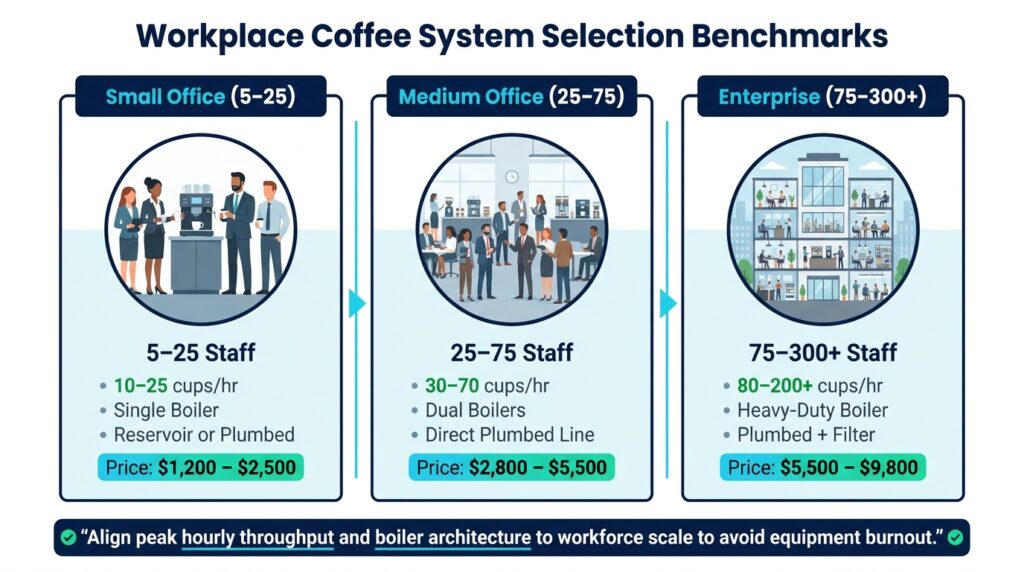
Selecting equipment based on these quantitative benchmarks prevents premature component wear, boiler temperature drops, and frequent operational disruptions. Facilities managers should map daily usage patterns before comparing specific equipment categories.
Bean-to-Cup vs. Espresso vs. Vending Systems
Commercial coffee equipment utilizes distinct mechanical extraction methods to convert roasted coffee beans or soluble concentrates into hot beverages. Understanding the engineering differences between these brewing systems enables buyers to choose technology that matches worker preferences and internal maintenance capabilities.
Bean-to-Cup Touchscreen Automation
Bean-to-cup machines process whole coffee beans through an internal burr grinder immediately before extracting espresso under 9 to 15 bars of pump pressure. Integrated milk systems auto-steam fresh milk or dissolve powdered milk bases to prepare cappuccinos, lattes, and flat whites via touch-screen selection.
These systems reduce per-cup consumable costs by utilizing bulk whole-bean coffee rather than single-serve plastic pods. Their automated self-cleaning cycles minimize daily labor while providing consistent cafe-quality beverages. To understand broad corporate purchasing strategies across all equipment classes, review our guide to purchase office coffee machine.
Traditional Commercial Espresso Equipment
Traditional commercial espresso machines extract coffee using manual or semi-automatic portafilters pressed against group heads fed by high-pressure rotary pumps. Steam wands require manual technique to texturize milk, making these units ideal for catered executive suites or offices with dedicated breakroom staff.
While traditional espresso systems offer superior taste control, their high labor requirements and steep learning curve make them impractical for general self-service breakrooms. Facilities seeking high-end automated alternatives can evaluate top-rated commercial models in our review of the best office coffee machines.
Automated High-Speed Coffee Vending Systems
Automated coffee vending systems combine high-speed bean grinders with multi-canister powder dispensers to prepare hot beverages in under 20 seconds. Internal mixing chambers combine water, coffee extracts, cocoa, and milk powders at high rotation speeds to eliminate breakroom queues.
These heavy-duty commercial machines operate continuously without thermal lag, making them the standard choice for manufacturing plants, call centers, and multi-floor corporate headquarters. To explore the internal engineering of these high-throughput systems, read how do coffee vending machines work.
Matching Capacity and Machine Specifications to Workplace Scale
Sizing a coffee machine correctly requires calculating your team’s total daily cup consumption and peak morning rush requirements. Operating a machine beyond its rated duty cycle leads to heater element failure, pump burnout, and voided manufacturer warranties.
Small Office Configuration (5 to 25 Employees)
Small offices require compact, low-noise countertop equipment that fits beneath standard 18-inch upper kitchen cabinets without requiring structural plumbing changes. Daily volume typically ranges from 15 to 40 cups, making an agile tabletop unit with an internal water tank or quick-connect line ideal.
The Premium Countertop Touch Screen Coffee Machine serves small workplaces by offering an intuitive touchscreen interface, customizable espresso strength settings, and an elegant compact design that fits neatly into limited breakroom spaces.
Medium Office Configuration (25 to 75 Employees)
Medium-sized facilities require dual-boiler equipment capable of brewing espresso and steaming milk simultaneously without temperature recovery delays. A dedicated plumbed water line hookup becomes essential at this scale to eliminate the labor of refilling manual water tanks throughout the day.
The Pro Coffee Vending Machine provides medium offices with heavy-duty internal grinders, rapid dispensing speeds, and a wide drink selection designed to handle simultaneous morning arrival rushes smoothly.
Large Enterprise Configuration (75+ Employees)
Enterprise environments need commercial-grade vending platforms equipped with high-capacity bean hoppers (2 kg+), large internal waste containers, and direct plumbing connections. These platforms operate continuously during shift changes, serving hundreds of employees with minimal daily restocking.
The CorePro Coffee Vending Machine delivers maximum throughput for large enterprise floors, offering robust high-speed performance, automated cleaning cycles, and low per-cup operational costs. Facilities teams evaluating broader equipment options can explore our full range of commercial coffee vending machines.
For organizations expanding their breakroom beverage menus to include cold drinks, adding an Iced Coffee Vending Machine accommodates workforce preferences during warmer seasons.
Financial Analysis: Total Cost of Ownership (TCO), Consumables & ROI
Determining the true cost of an office coffee machine requires analyzing initial equipment purchase price, ongoing consumable supplies, water filtration service, and routine maintenance over a 5-year operating life.
Direct Purchase vs. Commercial Equipment Leasing
Direct equipment purchases optimize long-term asset value by eliminating recurring interest charges and lease administration fees. Capital buyers retain asset ownership and can utilize corporate tax depreciation provisions like Section 179 to offset upfront costs.
Leasing commercial coffee machines spreads hardware costs into predictable monthly operating expenses (OpEx). Commercial leases often bundle routine filter replacements, preventive service visits, and emergency repairs into a single monthly invoice, reducing operational risk for facility managers.
Consumable Economics and Cost-Per-Cup Comparison
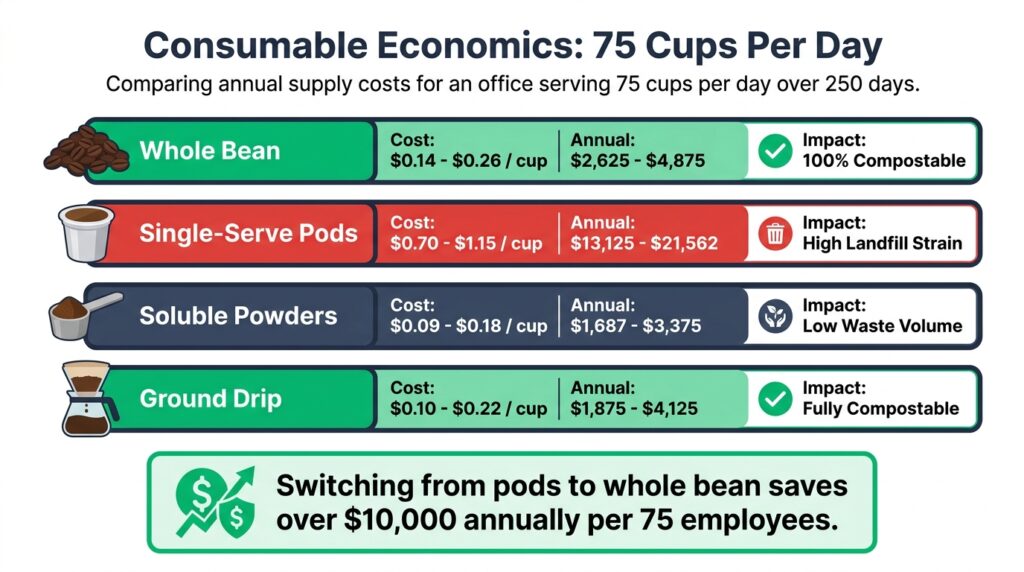
Whole coffee beans deliver significantly lower cost-per-cup economics than proprietary single-serve coffee pods or capsules. Bulk commercial coffee beans cost approximately $0.12 to $0.25 per espresso shot, whereas single-serve pods average $0.65 to $1.10 per cup.
| Consumable Format | Average Cost per Cup | Annual Cost (75 Cups/Day, 250 Days) | Waste Output | Environmental Impact |
|---|---|---|---|---|
| Whole Bean Coffee | $0.14 – $0.26 | $2,625 – $4,875 | Organic Grounds Only | 100% Compostable |
| Single-Serve Pods | $0.70 – $1.15 | $13,125 – $21,562 | Plastic / Aluminum Pods | High Landfill Strain |
| Soluble Vending Powders | $0.09 – $0.18 | $1,687 – $3,375 | Bulk Foil Packaging | Low Waste Volume |
| Ground Drip Coffee | $0.10 – $0.22 | $1,875 – $4,125 | Paper Filter & Grounds | Fully Compostable |
Replacing single-serve pod systems with a bean-to-cup machine in a 75-person office saves over $10,000 annually in consumable supplies alone. To evaluate detailed pricing across commercial categories, consult our complete coffee vending machine price guide.
Calculating potential financial returns is straightforward when evaluating whether coffee vending machines are profitable for corporate amenity models or revenue-generating vending placements.
Facility Planning: Utility Hookups, Water Filtration, and Ergonomics
Installing commercial coffee equipment requires verifying electrical supply circuits, water pressure levels, and countertop clearance before delivery. Proper breakroom preparation prevents installation delays and avoids costly plumbing retrofits.
Water Supply and Filtration Requirements
Plumbing coffee machines directly into facility water lines eliminates the manual labor of refilling water reservoirs. Direct water lines require a dedicated 3/8-inch cold water line delivering between 20 and 80 PSI of constant water pressure.
Inline water filtration systems are mandatory for commercial coffee equipment to trap sediment, remove chlorine taste, and prevent calcium scale accumulation inside boilers. Hard water scale is the primary cause of commercial heating element failure and pump blockage.
- Carbon Block Filters: Remove chlorine, unpleasant odors, and volatile organic compounds to ensure clean coffee taste.
- Ion-Exchange Softeners: Replace calcium and magnesium ions with sodium ions, preventing limescale buildup in boilers.
- Reverse Osmosis (RO) Systems: Filter heavy minerals in extreme hard-water regions; require remineralization cartridges to maintain proper coffee extraction pH.
Checking physical dimensions prior to plumbing installation is essential; consult our reference guide on coffee vending machine dimensions. Proper placement is equally vital for workflow efficiency; read our guide on the best location to place office coffee machine.
Electrical Power and Spatial Clearance
Countertop commercial coffee machines operate on standard 120V / 15A or 20A dedicated branch circuits. Heavy-duty enterprise vending systems with high-capacity dual boilers may require dedicated 220V / 20A single-phase power connections to support rapid multi-beverage heating.
Ensure top-loading bean-to-cup machines have at least 6 inches of vertical clearance above bean hoppers for easy refilling. Maintain 2 to 4 inches of side clearance around machine ventilation louvers to prevent internal electronics from overheating.
Operational Maintenance, Cleaning Protocols, and Longevity
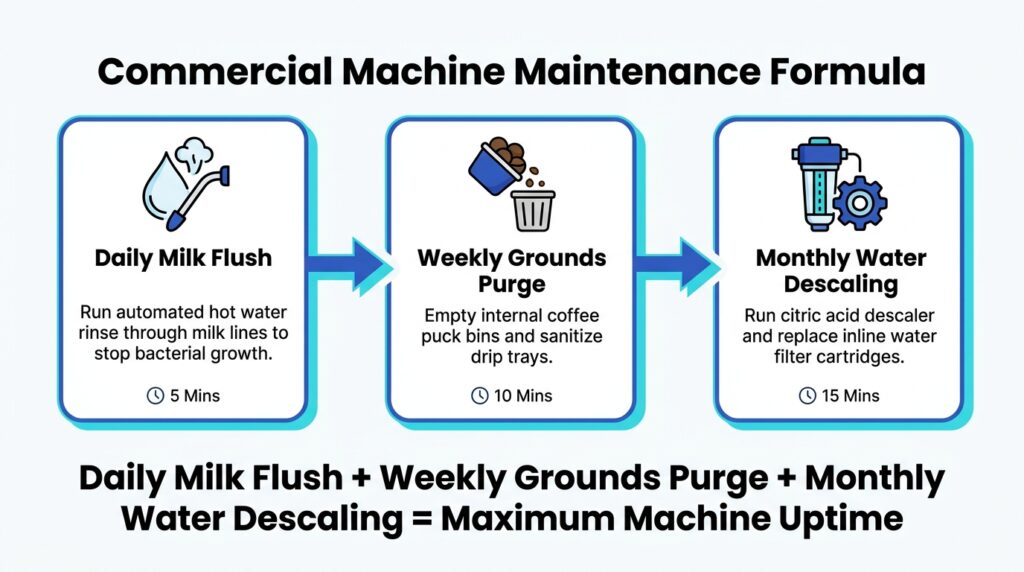
Regular cleaning and preventive maintenance extend commercial coffee machine operating lifespans from 3 years to over 8 years. Neglecting daily sanitization causes milk line blockages, rancid oil accumulation in grinders, and premature valve failures.
Daily Sanitization Schedules
Daily cleaning takes under 10 minutes and prevents bacterial growth in milk lines and dispensing nozzles.
- Flush Milk Circuit: Run an automated thermal rinse cycle through all internal milk lines immediately after daily service hours close.
- Empty Waste Trays: Discard spent coffee pucks from internal waste bins and wash drip trays with warm food-safe soapy water.
- Clean Dispensing Spouts: Wipe down coffee and milk dispensing nozzles with dedicated sanitizing cloths to prevent dried residue build-up.
For detailed operational guidance, review our complete coffee vending machine cleaning and maintenance guide. Instructing staff on proper daily operation is simplified with our tutorial on how to use a coffee machine in office.
Preventive Monthly Maintenance & Water Filter Replacement
Monthly maintenance focuses on descaling internal boilers and inspecting wear-and-tear components like group gaskets and O-rings. Running citric acid descaling solutions through water circuits dissolves mineral scale before it restricts water flow.
Replacing inline water filter cartridges every 3 to 6 months ensures consistent water quality and protects internal solenoid valves from mineral damage. Facilities teams can reference the ultimate guide to office coffee machines for comprehensive long-term service schedules.
Recommended Models Comparison Matrix and CTA
Comparing top-tier commercial coffee systems side-by-side streamlines purchasing decisions for facility leaders across all organization sizes.
| Featured Coffee Machine | Ideal Office Headcount | Core Technology & Capacity | Water Supply | Direct Link |
|---|---|---|---|---|
| Premium Countertop Touch Screen | 5 – 25 Employees | Touchscreen Bean-to-Cup, Compact Design | Reservoir / Plumbed | View Product Page |
| Pro Coffee Vending Machine | 25 – 75 Employees | Dual Boiler Espresso & Specialty Milk System | Direct Water Line | View Product Page |
| CorePro Coffee Vending Machine | 75+ Employees | High-Speed Commercial Multi-Canister Vending | Direct Water Line | View Product Page |
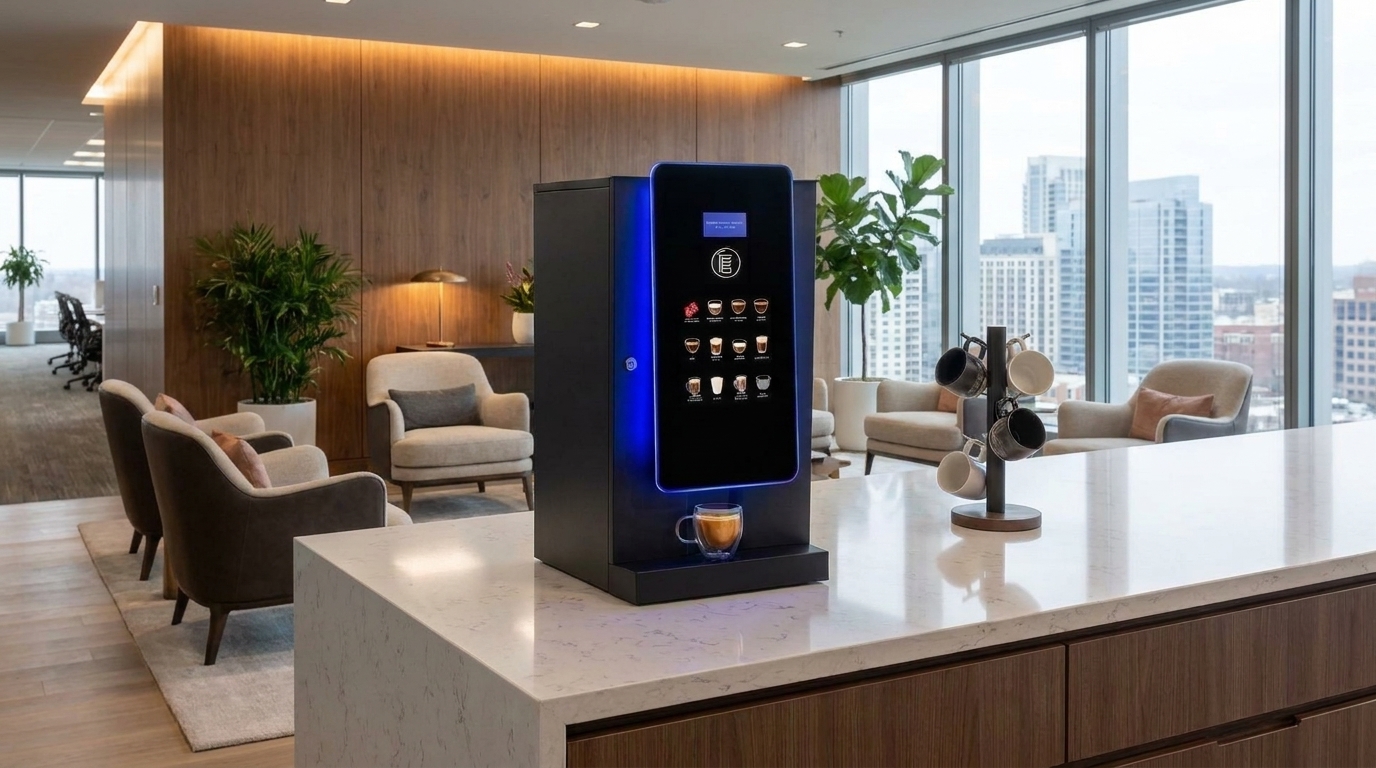
Enterprise coffee vending machine deployed in corporate breakroom. Source: Guangzhou Jetinno Intelligent Equipment Co., Ltd.
Pros and Cons of Commercial Coffee Machine Upgrades
| Advantages & Pros | Strategic Considerations & Cons |
|---|---|
| Significant Consumable Savings: Whole-bean coffee lowers per-cup costs by up to 80% compared to pods. | Initial Capital Cost: Commercial equipment requires higher upfront investment than domestic units. |
| Enhanced Workforce Morale: Premium specialty coffee increases workplace satisfaction and retention. | Routine Cleaning Required: Daily milk flushing and weekly waste purging are essential for reliability. |
| Reclaimed Productivity: Keeps employees on site, eliminating 15–20 minute external coffee runs. | Plumbing Requirements: Direct line hookups require nearby cold water supply access. |
Upgrade Your Breakroom with Enterprise Coffee Solutions
Providing high-quality coffee inside your facility is one of the most effective, low-cost amenities for driving employee engagement and breakroom efficiency. Selecting commercial brewing hardware tailored to your team size guarantees reliable operation and long-term financial ROI.
Explore our complete catalog of commercial espresso machines, bean-to-cup systems, and enterprise beverage dispensers at the official VMFS USA Coffee Vending Machines Collection to find the perfect brewing system for your organization.
Frequently Asked Questions
How do I determine the right size coffee machine for my office?
Determine the right size coffee machine by calculating your total office headcount and peak morning hourly cup demand. Small offices (under 25 staff) need countertop units rated for 20–40 cups daily, while larger facilities (75+ staff) require plumbed commercial vending machines capable of dispensing 100+ cups per hour.
What is the difference between bean-to-cup and single-serve pod coffee machines?
Bean-to-cup machines grind fresh whole coffee beans on demand for each cup, delivering higher beverage quality and lower per-cup costs ($0.15 vs $0.75+). Single-serve pod machines use pre-packaged plastic cups, which generate significantly higher supply costs and environmental landfill waste.
Should an office coffee machine be plumbed into a water line?
Plumbing an office coffee machine into a dedicated water line is strongly recommended for offices with more than 15 employees to eliminate the constant daily labor of manually refilling water reservoirs. Direct water connections ensure continuous brewing availability during peak morning hours.
How much does a commercial office coffee machine cost?
Commercial office coffee machines cost between $1,200 for compact tabletop bean-to-cup models and $9,800 for high-volume enterprise vending systems. Ongoing consumable costs add $0.10 to $0.30 per cup for whole beans and milk supplies.
What maintenance is required for an office bean-to-cup machine?
Office bean-to-cup machines require a 5-minute daily automated milk line rinse, weekly emptying of internal coffee grounds containers, and monthly water filter replacements or descaling cycles to prevent calcium scale buildup.
Which coffee machine is best for a medium-sized office of 50 people?
A medium-sized office of 50 people operates best with a dual-boiler commercial machine like the Pro Coffee Vending Machine, which features direct plumbing hookups, rapid dispensing speeds, and heavy-duty internal grinders built for continuous daily use.
Why is water filtration necessary for commercial office coffee machines?
Inline water filtration removes chlorine taste, sediment, and minerals that cause calcium scale accumulation inside boilers and solenoid valves. Proper filtration protects internal machine components from premature failure and maintains consistent beverage flavor.
Can commercial coffee machines dispense non-coffee hot beverages?
Yes, multi-canister commercial machines store instant solubles to dispense hot chocolate, chai lattes, and hot water for tea alongside traditional espresso drinks. High-capacity units like the CorePro Coffee Vending Machine accommodate broad beverage menus effortlessly.
Is leasing or buying an office coffee machine better for businesses?
Buying an office coffee machine maximizes long-term financial ROI and asset ownership, while leasing spreads capital outlay into predictable monthly operating expenses that often include maintenance and filter service packages.
How does an on-site office coffee machine improve workplace productivity?
An on-site office coffee machine improves productivity by eliminating off-site cafe trips, saving 15 to 30 minutes of lost working time per employee daily while keeping staff energized and collaborative inside the building.