
Find a Machine | Water Refill | By the VendingFinder Team | September 2026
You are carrying a bottle and it is empty. There is a restroom tap somewhere, which you would rather not use. There might be a drinking fountain, which will be lukewarm if you can find it. And there is a machine somewhere nearby selling you the same water in a plastic bottle for several dollars.
There is a fourth option that most people do not know exists, and the number of them is growing quickly. A refill machine dispenses filtered water, chilled and frequently sparkling, straight into your own bottle, priced by volume rather than by container.
Here is how to find one, what to expect when you do, and how to tell a good one from a neglected one before you pay.
Know Which Thing You Are Looking For
Three different things get called the same thing, and the difference matters if you are making a trip for it.
- A bottle filling station. Usually free, often mounted above or beside a drinking fountain, with a sensor and a counter showing bottles saved. Filtered to some degree, rarely chilled properly, never sparkling. Increasingly common in airports, campuses and public buildings.
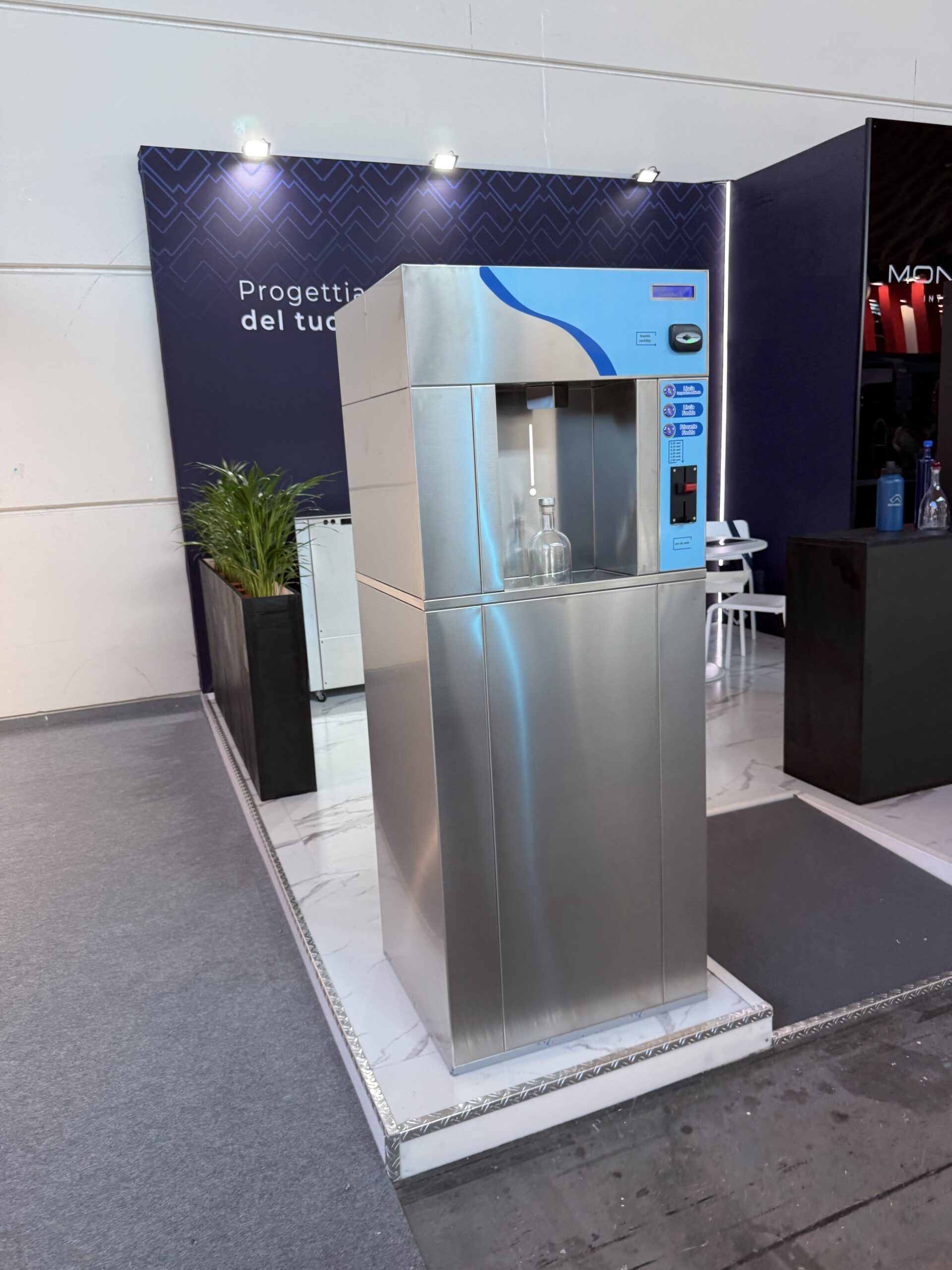
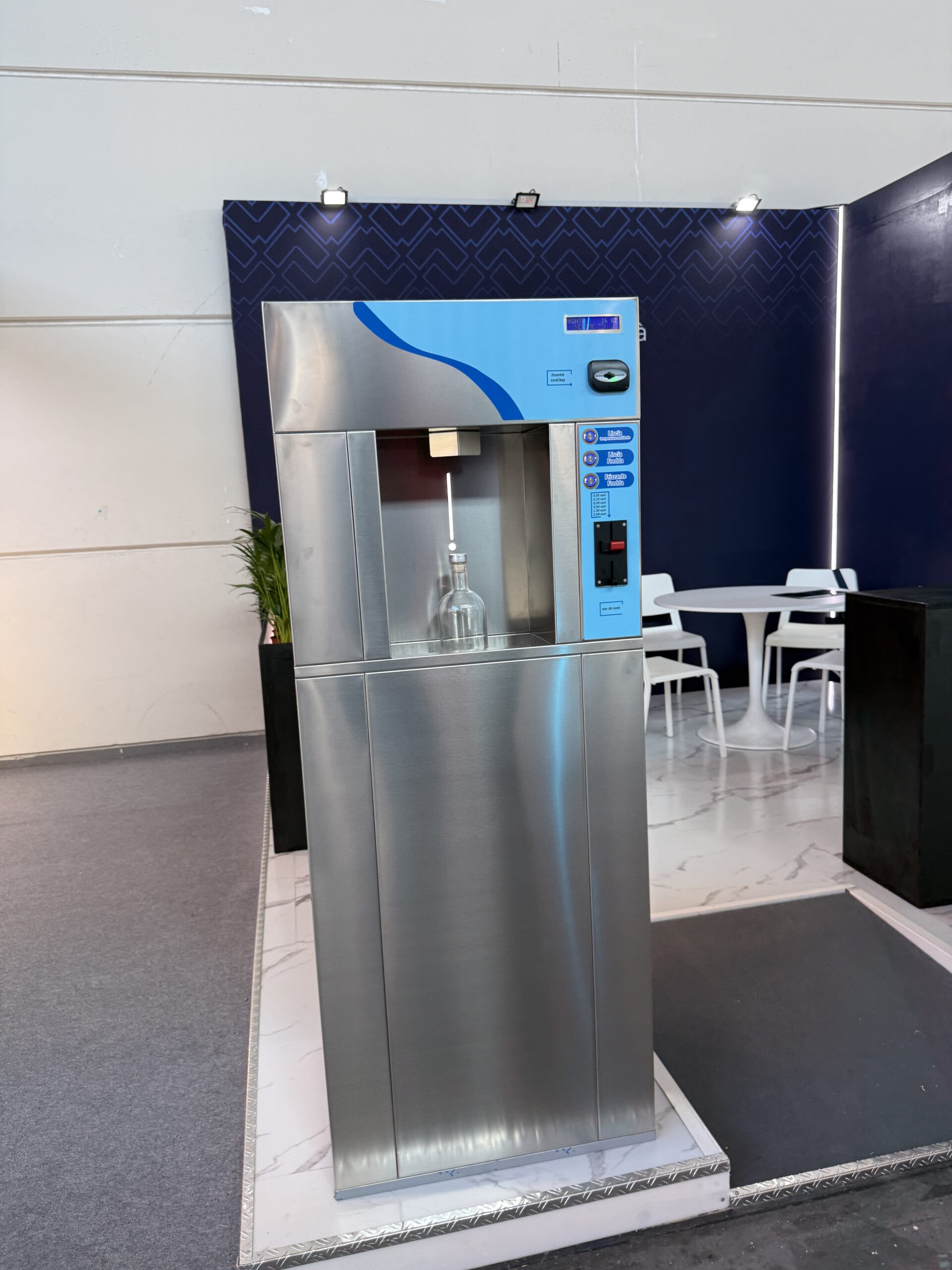
- A water refill vending machine. What this article is mostly about. Paid, plumbed in, with proper multi stage filtration, genuine chilling and frequently a sparkling option. You choose the volume and pay for what you draw.
- A water store or bulk dispenser. Larger units, often outside supermarkets, aimed at people filling five gallon containers for home use rather than a personal bottle.
If you want cold or sparkling, the middle one is the only one that reliably delivers. If you only want your bottle full and do not mind lukewarm, look for the first and save your money.
Where They Actually Are
These machines need a water line and a drain, which sounds like a technical detail and is actually the most useful thing you can know when hunting one. They only exist in buildings with accessible plumbing, and they are almost always positioned near it.
- University campuses. The most likely place by a distance. Student unions, libraries, recreation centres and academic buildings. Many campuses have both free filling stations and paid machines offering chilled and sparkling.
- Gyms and fitness centres. Usually near the changing rooms or on the way out from the gym floor, which is where the plumbing runs.
- Airports, past security. Growing quickly, precisely because everybody has just been made to empty their bottle. Look near restrooms and in gate seating areas.
- Hospitals and medical centres. Main lobbies, outpatient waiting areas and staff corridors.
- Recreation centres, pools and sports complexes. Near changing facilities and spectator seating.
- Large transit stations. Concourses and waiting areas rather than platforms, since platforms rarely have the plumbing.
- Some parks and trailheads. Less common because outdoor plumbing is harder, but they exist and are enormously welcome when you find one.
The trick that works in any large building: head toward the restrooms. That is where the water supply and drainage already are, so refill machines and filling stations are almost always within sight of them. It beats wandering the concourse, and it works in airports, campuses and hospitals alike.
Finding One Before You Travel
- Check the map first. Our live machine map tracks machines individually rather than leaving them buried inside whatever building they occupy, which is the core problem with finding any of these.
- Look at the machine listing for the detail that matters. Whether it offers sparkling, whether it takes cards, and roughly what it costs. Each machine page also records where it sits inside the building.
- Ask at the desk. Staff in a campus building, gym or hospital know exactly where these are, and it is faster than searching.
- Try several search terms. Water refill station, bottle filling station, water vending machine and hydration station all describe overlapping things and different places use different words.
- Check the venue’s own information. Airports and universities in particular often list filling stations on their maps and apps, because they installed them as a sustainability measure and want people using them.
Judging a Machine Before You Pay
A few seconds of looking tells you whether a machine is being maintained, which matters more here than with any other kind of vending because you are drinking the output.
- Look at the dispense bay. The recess where you put your bottle should be clean, dry and free of limescale or staining. This is the single best indicator of whether anybody is servicing the machine, and a grubby bay is a reason to walk away.
- Find the information panel. A properly operated machine displays where the water comes from and how it is treated. In some states that display is legally required, so its absence tells you something.
- Check for a service or inspection sticker. Many machines carry a record of the last service, and in several states monthly servicing is a legal requirement rather than a courtesy.
- Look at the nozzle. It should not be dripping, crusted or visibly dirty.
- Check the price before you commit. Pricing is by volume, so work out what filling your bottle will actually cost rather than assuming.
Using It Without Making a Mess
- Check your bottle fits. The bay accommodates most bottles but tall hydration flasks and wide mouth containers occasionally do not. Look before you pay.
- Know roughly what your bottle holds. Since you are buying by volume, knowing whether you need half a litre or a litre avoids paying for water that ends up on the floor.
- Go slowly with sparkling. Carbonated water foams considerably more than still, so it needs headroom and a slower fill. Overfilling is the most common mistake people make at these machines.
- Hold the bottle steady and centred. The dispense is faster than a fountain and it will splash if the bottle is off to one side.
- Take a moment afterwards. Wiping a spill helps the next person and keeps the machine in the condition you would want to find it in.
Still, Sparkling or Ambient
Most refill machines offer three choices and people default to chilled still without much thought. Worth knowing what the others are for.
- Chilled still. The default and the right choice most of the time. Properly cold, which is the main thing a drinking fountain fails to deliver.
- Chilled sparkling. The reason to use one of these machines rather than anything free. Note that it costs more at most machines, and check your bottle can take it, because carbonation and a narrow neck do not mix well.
- Ambient filtered. Room temperature and genuinely useful in two situations people overlook. If you are about to add powder, electrolyte tablets or squash, cold water dissolves them poorly. And if you are filling a bottle to leave in a bag for hours, it will warm up regardless, so you may as well not pay for chilling.
One thing worth knowing about sparkling. The carbonation is added at the point of dispense, so it is at its liveliest immediately and will lose fizz faster than a sealed bottle would. Drink it sooner rather than saving it for the afternoon.
Looking After Your Own Bottle
The machine is only half of it. A well maintained machine filling a neglected bottle still gives you a poor result, and this is the part nobody mentions.
- Wash it properly and often. Bottles that only ever get rinsed develop a film you can feel, and it affects taste far more than the water source does.
- Pay attention to the lid. Threads, seals and straw components trap more than the bottle body and are the part most people skip entirely.
- Let it dry open. Sealing a damp bottle overnight is how they start to smell.
- Insulated bottles suit these machines well. Since you are paying for chilled water, a bottle that keeps it cold for hours makes considerably more of what you bought.
- Check the mouth width before you rely on a machine. Wide mouth bottles are easier to fill without splashing and much easier to clean.
Is It Worth Paying For?
A fair question, given there is usually a tap somewhere. The honest answer depends entirely on what you want.
If you simply want your bottle full and do not care about temperature, find a free filling station and use it. Nobody should pay for something they can get for nothing.
Paying makes sense in three situations. If you want it genuinely cold, because fountains rarely are. If you want sparkling, because nothing free offers it. Or if the tap water where you are does not taste good, because proper multi stage filtration is a real difference rather than a marketing claim.
The comparison worth making is not against the fountain, it is against the bottled water in the machine down the corridor. Against that, a refill is usually a fraction of the price, colder, and produces no plastic at all.
Refilling While Travelling
This is where refill machines earn their keep, because travelling is exactly when bottled water is most expensive and most wasteful.
- Airports, past security. Empty your bottle before the checkpoint rather than binning it, then refill airside. Filling stations and refill machines are both increasingly common past security precisely because everybody arrives there thirsty with an empty bottle.
- Check the airport map before you fly. Many list their filling stations, and knowing which terminal has them saves wandering with a bag.
- Trains and coach stations. Concourses and waiting areas rather than platforms, since platforms rarely have the plumbing these machines need.
- Hotels increasingly have them. Many properties are replacing in room plastic bottles with a refill point in the lobby or by the gym, so it is worth asking at the desk rather than assuming.
- A collapsible bottle solves the security problem entirely. It packs flat when empty, passes the checkpoint without argument, and fills at the first machine you find.
One caution when travelling internationally. Refill machines connect to the local mains supply and filter it, which is excellent where the tap water is already safe and not a substitute for bottled water where it is not. Filtration improves taste and removes many things, but it is not a guarantee about a supply you would otherwise avoid.
The Number Behind All of This
Worth knowing, because the scale is larger than most people assume. Published research puts the number of drinks containers wasted in the United States at more than 140 billion a year, of which roughly 74 billion are plastic bottles and more than 50 billion are cans. That is over 400 containers per person per year, more than one per person per day.
Recycling does not close that gap. EPA figures put plastic bottle recycling at roughly 20 to 29 percent, glass around 40 percent, and aluminium cans, the best of the three, at only around half. A refilled bottle sidesteps the question entirely, because no container was made in the first place.
Found One? Add It.
Refill machines are genuinely hard to find because they sit inside other buildings and nobody has been keeping track of them. If you come across one, add it and note four things: exactly where it is in the building, whether it offers sparkling, whether it takes cards, and roughly what it costs.
Those are the details somebody with an empty bottle actually needs. You can read more about what we are building on our about page, and machine quality ratings are explained on the score.
Want One Where You Are?
If your campus, gym or workplace has nothing, that is worth raising, because these are usually installed when somebody asks. Venues frequently want them for environmental reasons and simply have not got round to it.
If you manage a building with plumbing and people who carry bottles, you can put it forward through our for locations page. If you are considering operating machines yourself, start at for operators, and the machines themselves come from suppliers like VMFS USA.
Frequently Asked Questions
How do I find a water refill station near me?
Check the live map first, then look on university campuses, in gyms, past airport security, and in hospitals and recreation centres. The reliable trick in any large building is to head toward the restrooms, because that is where the plumbing already runs and these machines are almost always near it.
What is the difference between a filling station and a refill machine?
A filling station is usually free, lightly filtered, rarely properly cold and never sparkling. A refill vending machine is paid, with multi stage filtration, genuine chilling and frequently a sparkling option, priced by the volume you draw. If you want cold or sparkling, only the second reliably delivers.
How do I know the water is safe?
Look for the information panel showing the water source and treatment method, which several states require to be displayed. Check that the dispense bay is clean and dry, since that is the clearest sign the machine is being serviced, and look for a service record sticker. In some states monthly servicing and regular bacteriological testing are legal requirements.
Will my bottle fit?
Most will, though very tall flasks and unusually wide containers occasionally do not. Check the bay before paying. If you are buying sparkling, leave more headroom than you think you need, because carbonated water foams considerably more than still.
Find One Near You
Search the live map for refill machines and everything else, and note what you find so the next person with an empty bottle does not have to hunt for it.